
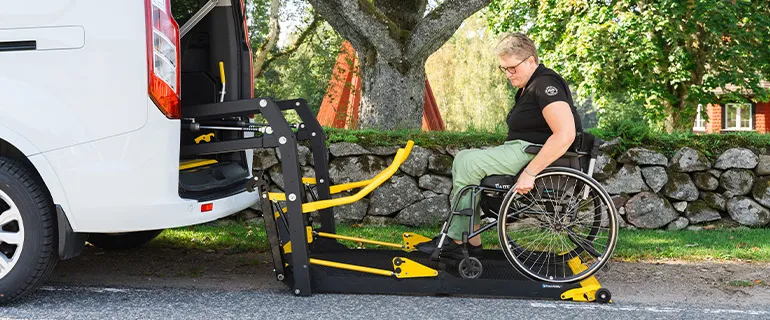
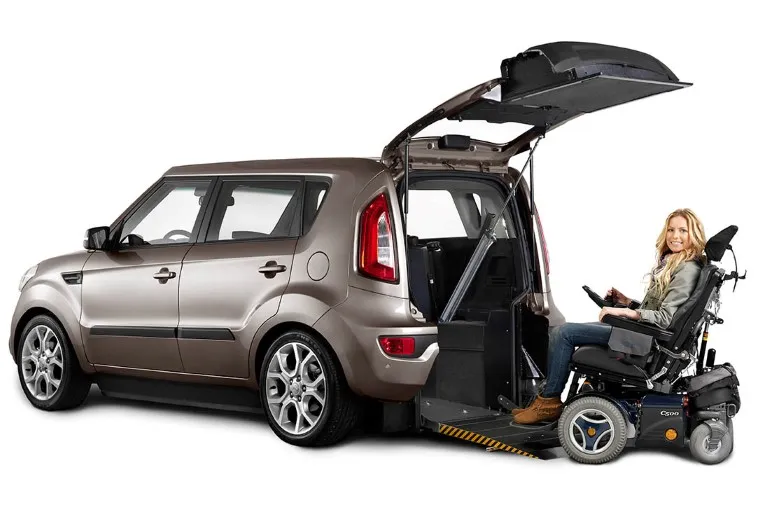
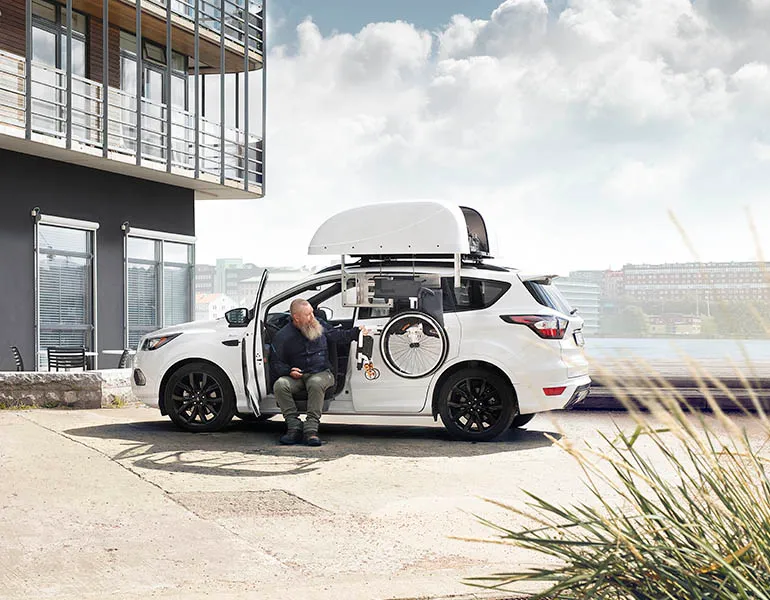
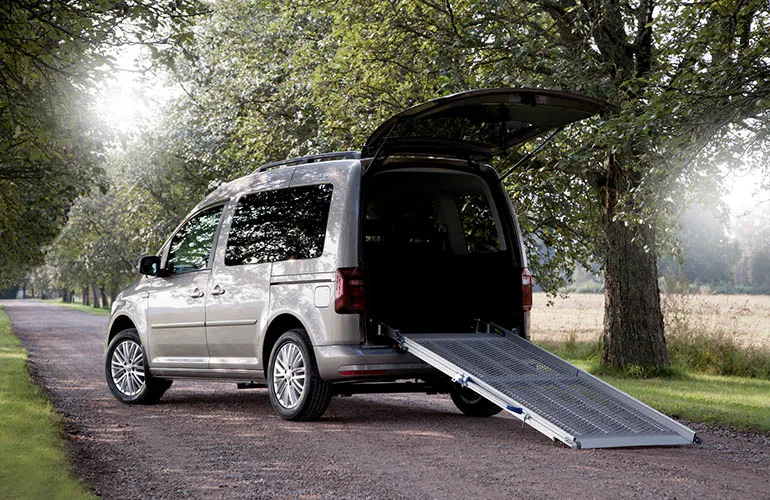
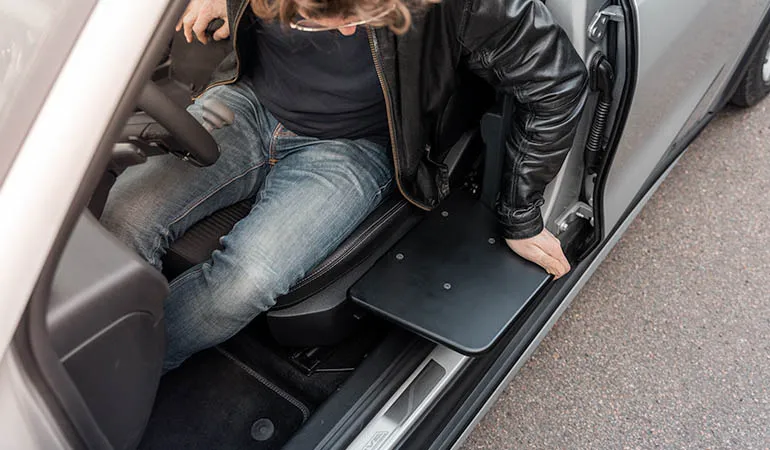
Cities do not move on slogans. They move when a taxi, minibus, or paratransit van can board a wheelchair passenger in a few calm minutes — then secure chair and person for the road.
That is why fleet buyers talk about “ADA products” even outside the United States: the ADA framework made accessible boarding and securement a daily operational standard, and global manufacturers built platforms and restraints to match.
What fleet accessibility actually requires
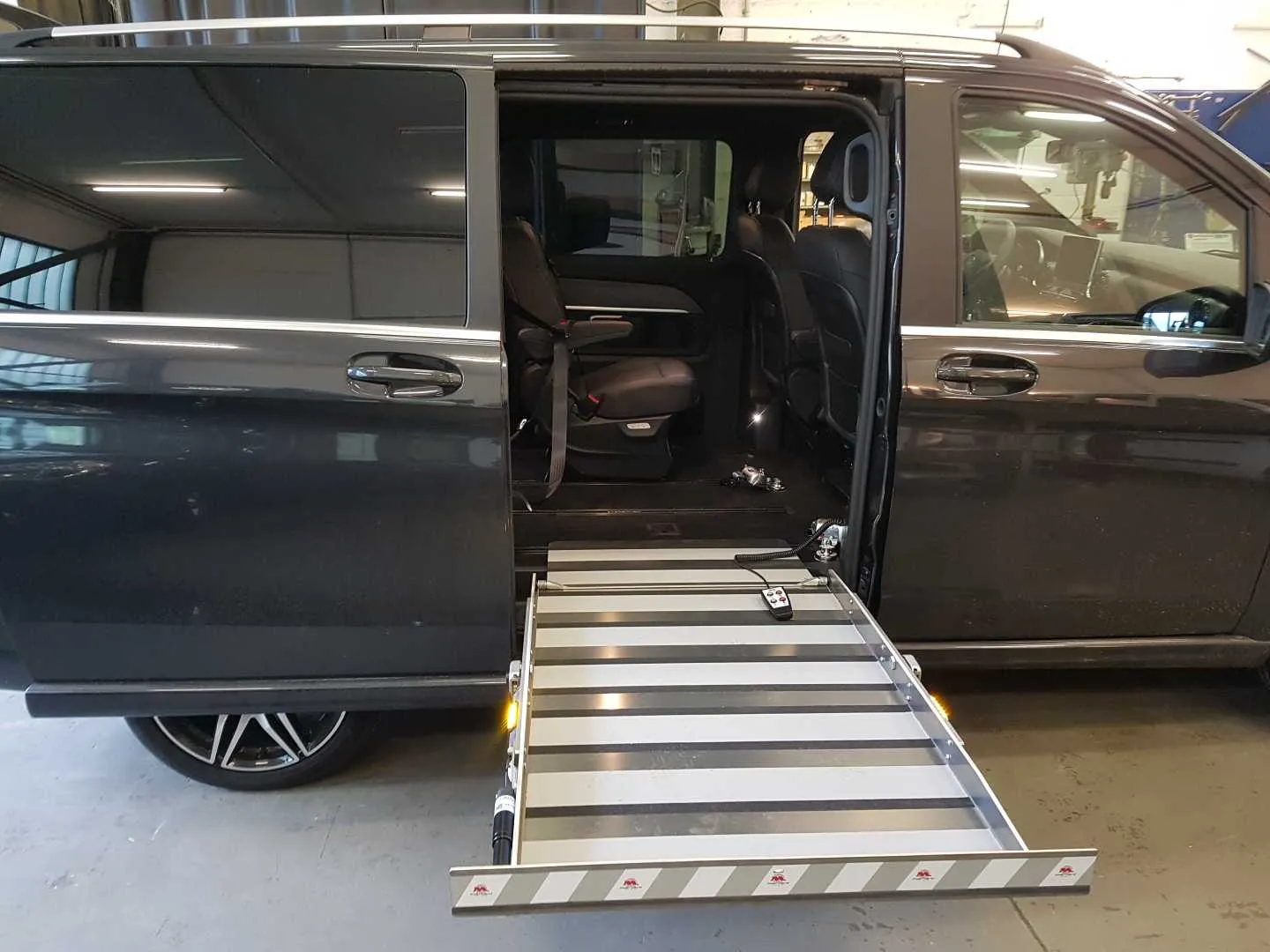
Under US ADA vehicle guidelines, covered buses and vans need a boarding device (lift or ramp) and enough clearance to reach a securement location. Larger vehicles need more securement positions; design loads and platform sizes are spelled out so a common wheelchair can board.
Guidance summarised for operators also stresses a simple rule: lifts, ramps, and straps must stay in working order — and if something fails, an accessible alternative must still exist.
Lift / ramp
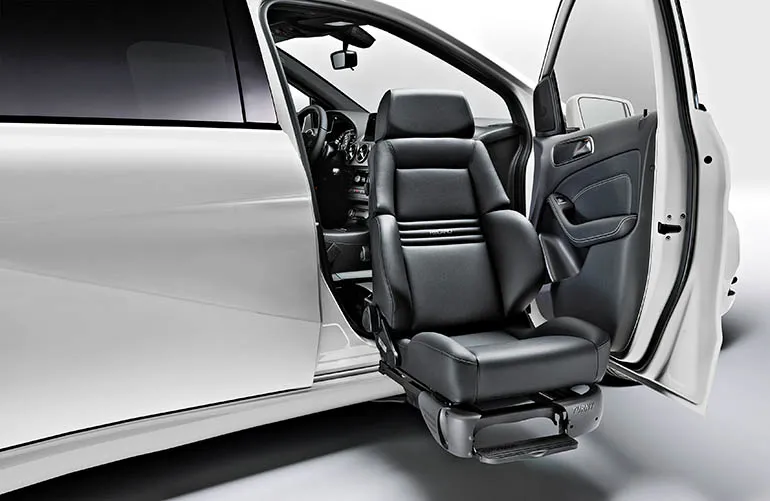
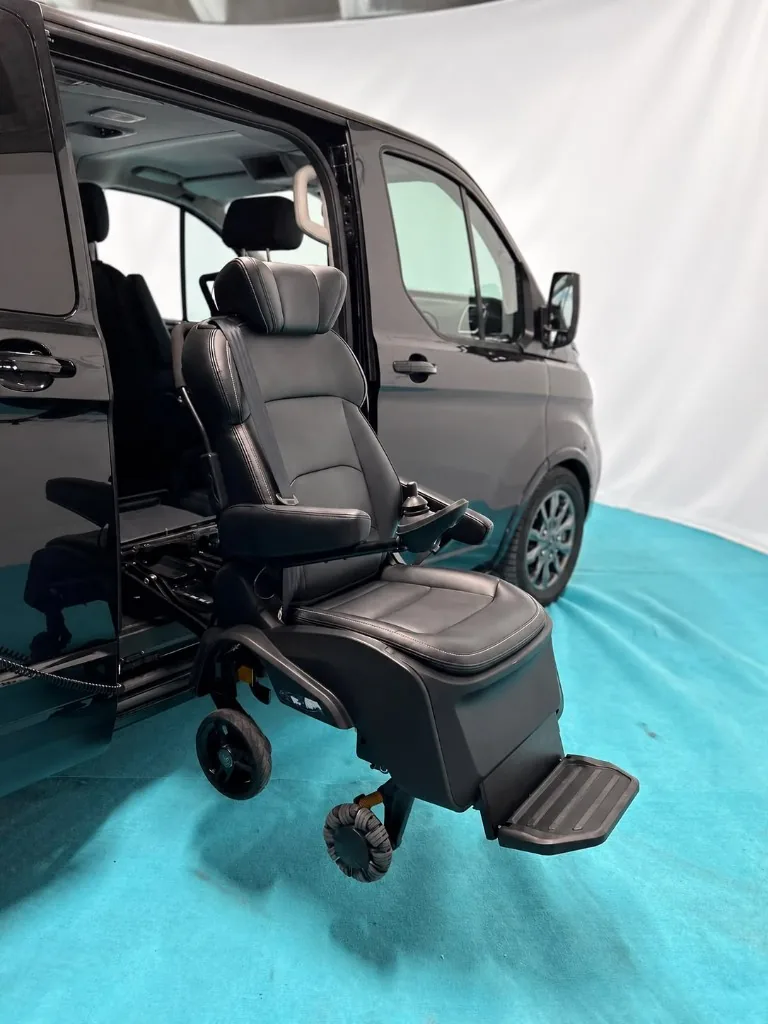
Gets the mobility aid from street to floor. Fleet lifts favour quick install, durability, and service access over private-van cosmetics.
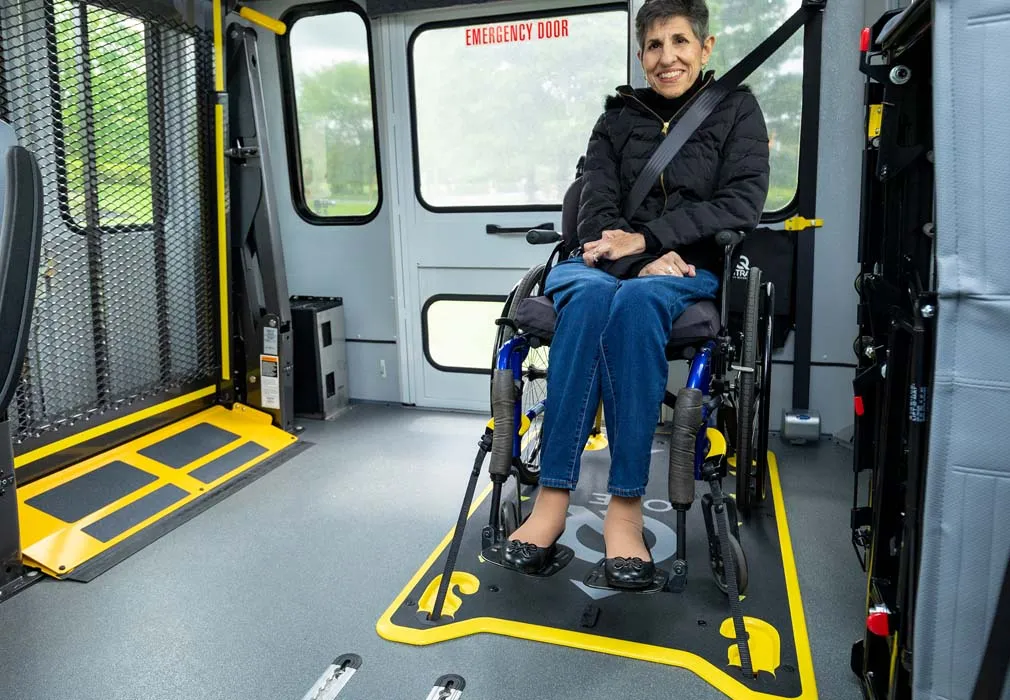
WTORS securement
Four-point (or equivalent) wheelchair tie-downs plus a 3-point occupant belt. Chair and person are two jobs — never one strap doing both.
ISO 10542: the crash-tested language fleets share
In Europe and many export markets, wheelchair tiedown and occupant-restraint systems (WTORS) are judged against ISO 10542. BraunAbility’s commercial restraint manuals, for example, cite compliance including a dynamic frontal impact test at about 48 km/h / 20 g with a surrogate wheelchair and test dummy — and warn that lap-only belts undermine the system.
For a fleet manager, that translates to: buy kits crews can deploy the same way every shift, with documentation and spare parts.
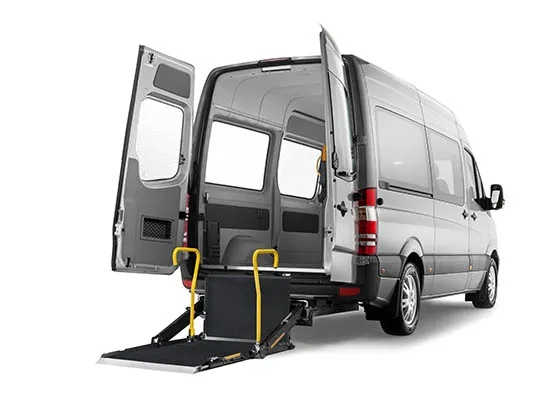
Taxi, bus, paratransit: same stack, different pressure
- Taxi / ride fleets — side or rear boarding that does not kill passenger flow; securement that a driver can finish without a 20-minute ritual.
- City buses — high-cycle ramps or lifts, clear securement spaces, signage and training.
- Paratransit / community transport — door-to-door reliability; mixed chair sizes; operators who live or die by first-time-right installs.
Maya Mobility for operators We supply and support commercial-ready platforms (including BraunAbility A-Series class thinking) and securement layouts for Turkish and regional fleets. Ask for duty cycle, vehicle type, and how many wheelchair positions you need per van.
Why “proven” beats “clever”
Fleet products fail in public. A private family can wait a week for a service visit; a city route cannot. That is why operators stick to established lift families and ISO-tested restraint kits — and why Maya Mobility emphasises assessment, training, and parts availability as much as the hardware photo.
Planning an accessible fleet vehicle?
Tell us vehicle type, passenger mix, and how many wheelchair positions you need. We will map lift + securement options that crews can run every day.
Sources
- U.S. Access Board — ADA vehicles Subpart B (buses, vans) (boarding devices, securement locations, design loads)
- 49 CFR § 38.23 — Mobility aid accessibility (lift/ramp + securement requirements in US DOT rules)
- disAbilityNavigator — The ADA and Accessible Ground Transportation (operator summary: working equipment, private providers)
- BSI — ISO 10542-1 WTORS (international tiedown & occupant-restraint requirements)
- BraunAbility Europe — WTORS (commercial securement kits; ISO 10542 crash-test practice cited in product manuals)
- BraunAbility Europe — Wheelchair lifts (fleet / commercial platform context)